
 By Amelia James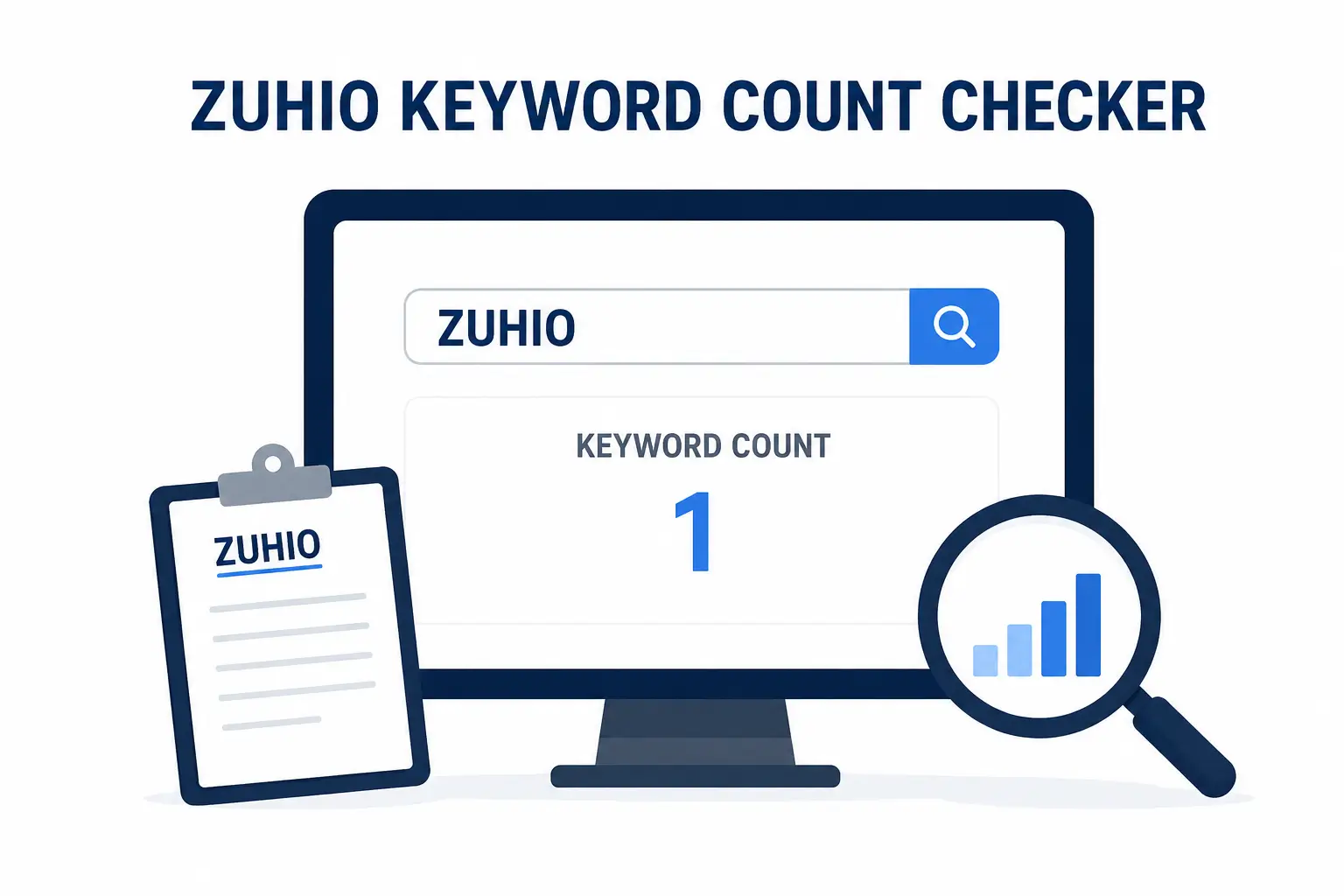
Writing SEO-friendly content is not always easy. Many writers struggle with one simple question. Have I used my keyword too much, or not enough? Getting this balance right can make a big difference in how content performs online.
This is exactly where the Zuhio Keyword Count Checker comes in. It is a simple, free tool that helps writers check their keyword usage before publishing. No complicated setup. No confusing dashboard. Just a quick, clear answer.
In this guide, Teche Advice explains everything about Zuhio Keyword Count Checker. We keep the language simple and the sentences short. By the end, you will know exactly why this tool can help your SEO success.
Let’s break it all down.
Keyword Count Checker is a free online tool built to check keyword usage in written content. It scans your text and tells you how many times a specific keyword appears. It also shows the keyword density, which is the percentage of that keyword compared to your total word count.
This tool is part of a larger collection of simple, single-purpose tools built by Zuhio. Instead of offering one giant platform with too many features, Zuhio focuses on small tools that do one job really well.
The Keyword Count Checker follows the same idea. It does not try to do everything. It focuses only on keyword frequency and density, and it does that job clearly and quickly.
Here is what makes it stand out:
- It is completely free to use
- It requires no account or sign-up
- It works directly in your browser
- It gives instant, easy-to-read results
For writers who just want a fast answer about keyword balance, this focused approach works well.
Understanding how this tool works helps explain why so many writers rely on it. The process behind it is simple, but the results are genuinely useful.
At its core, the tool works in three basic steps. First, you provide your written content. Second, you choose the keyword you want to check. Third, the tool scans everything and gives you the results.
The output includes two main details:
- The total number of times your keyword appears
- The keyword density as a percentage of your full content
This information helps you quickly see whether your content leans toward underuse or overuse of your target keyword. Instead of guessing, you get a clear number to work with.
The tool does not read your content the way a human editor would. It focuses purely on counting and calculating. That narrow focus is actually its biggest strength, since it keeps the results fast and accurate.
Even though this is a simple tool, it comes with a few features that make it genuinely useful for content creators.
The tool counts keyword occurrences almost instantly. There is no waiting or loading delay. You paste your content, and the results appear right away.
This speed is especially helpful for writers working on tight deadlines. Instead of manually counting keywords, the tool does it in seconds.
Along with the raw count, the tool also calculates keyword density. This percentage shows how much of your content is made up of that specific keyword.
Density numbers help writers avoid two common problems:
- Using a keyword too rarely, which can confuse search engines
- Using a keyword too often, which can feel unnatural to readers
Many SEO tools require account creation, subscriptions, or complicated setup steps. Zuhio Keyword Count Checker skips all of that.
You can open the tool, paste your text, and get results without creating an account. This makes it especially useful for quick checks during a busy writing schedule.
Some writers assume keyword density is an outdated concept. While search engines have become smarter over time, keyword frequency still plays a small but real role in SEO.
Search engines use many signals to understand what a page is about. Keyword frequency is one of those signals, even if it is not the only one. When a keyword appears a reasonable number of times, it helps search engines understand your topic more clearly.
However, balance is key. Here is why:
- Too little keyword usage can make your topic unclear to search engines
- Too much keyword usage can lead to keyword stuffing, which harms readability
- Balanced keyword usage supports both search engines and human readers
This is exactly the gap that Keyword Count Checker fills. It gives writers a clear, simple way to check that balance before publishing content.
This tool is not built for one specific type of user. Many different people can benefit from using it regularly.
Common users include:
- Bloggers who want to confirm keyword placement before publishing long-form posts
- SEO specialists doing a quick content review without opening a full SEO platform
- Copywriters checking that a focus keyword has not been overused on landing pages
- Website owners managing their own content without access to enterprise SEO tools
- Content editors doing a final pass review before content goes live
Because the tool is so simple, it fits smoothly into almost any content workflow, no matter the size of the team or business.
Using this tool is extremely straightforward. Here is a simple step-by-step guide to help you get started.
Visit the Keyword Count Checker section on the Zuhio website. No downloads or installations are needed. It works directly in your browser.
Copy your full article or piece of content and paste it into the text field. This can be a blog post, product description, or any written content you plan to publish.
Type in the specific keyword or phrase you want to check. This should be the main focus keyword for your content.
Once submitted, the tool instantly shows how many times your keyword appears and its density percentage. From here, you can decide whether to add more keyword mentions or reduce them.
This entire process usually takes less than a minute, making it easy to fit into any writing routine.
Using this tool regularly can offer real benefits for anyone focused on SEO-friendly content. Here are some of the biggest advantages.
- Saves time: No manual counting or guesswork needed.
- Improves content balance: Helps avoid both underuse and overuse of keywords.
- Supports better readability: Naturally balanced keyword usage reads better for humans.
- Easy for beginners: No technical SEO knowledge required to use it.
- Fits into any workflow: Works well as a final check before publishing.
For writers who want quick, reliable feedback without opening a full SEO suite, this tool offers real practical value.
Many writers make small keyword mistakes without even realizing it. Keyword Count Checker helps catch these issues before they cause problems.
Some common mistakes include:
- Repeating the main keyword too many times in a short section
- Forgetting to include the keyword enough times throughout longer content
- Focusing only on the keyword while ignoring natural sentence flow
- Not checking keyword balance until after publishing
By running a quick check before hitting publish, writers can catch these issues early. This leads to cleaner, more balanced content overall.
It helps to understand how this tool compares to larger, more complex SEO platforms. Both types of tools have their place, but they serve different needs.
Larger SEO platforms often include:
- Backlink analysis
- Technical site audits
- Keyword research and search volume data
- Competitor tracking tools
Keyword Count Checker, on the other hand, focuses only on keyword frequency and density. It does not try to replace these bigger platforms.
Instead, it works best as a lightweight companion tool. Writers can use larger platforms for research and strategy, then use Keyword Count Checker for a fast, final content check.
While the tool is useful, it is important to understand its limits. Being aware of these limitations helps you use the tool correctly.
The tool does not:
- Analyze backlinks
- Perform technical SEO audits
- Suggest new content topics
- Provide keyword search volume data
This narrow focus is intentional. The tool is built to do one job well, rather than trying to cover every part of SEO. For complete SEO success, it should be paired with broader strategies and tools.
To get the most value from this tool, it helps to follow a few simple best practices.
- Write naturally first. Focus on clear, helpful content before checking keyword counts.
- Check keyword density after writing, not while writing.
- Avoid forcing keywords into sentences where they do not fit naturally.
- Use secondary keywords alongside your main keyword for better topic coverage.
- Review results carefully, rather than aiming for one exact “perfect” number.
Following these habits helps ensure your content stays both SEO-friendly and enjoyable to read.
Understanding SEO tools can feel overwhelming, especially with so many options available online. That is where Teche Advice comes in. Our team focuses on simplifying complex tech and SEO topics into clear, easy-to-follow guides.
Whether you are a beginner blogger or an experienced content creator, Teche Advice offers some of the best resources for learning how to use tools like Zuhio Keyword Count Checker effectively. We aim to make SEO approachable for everyone, regardless of experience level.
Zuhio Keyword Count Checker may be a simple tool, but it solves a real, everyday problem for writers. By quickly showing keyword frequency and density, it helps content creators find the right balance before publishing.
It is not meant to replace larger SEO platforms. Instead, it works best as a fast, reliable companion tool during the final stages of content creation. For bloggers, marketers, and website owners who want a quick, no-fuss way to check keyword usage, this tool offers real, practical value.
If SEO success matters to you, adding a quick keyword check to your publishing routine is a small step that can make a real difference.
Yes, the tool is completely free and requires no account creation. Anyone can access it directly through a browser.
No, this tool only focuses on keyword frequency and density. It does not perform technical SEO audits.
Bloggers, content writers, and SEO specialists benefit most from this tool. Small business owners managing their own content can use it too.
Search engines still use keyword frequency as one small ranking signal. Balanced usage helps both search engines and readers.
No, it works best alongside broader SEO tools, not as a replacement. It focuses only on keyword counting and density checks.