
 By Amelia James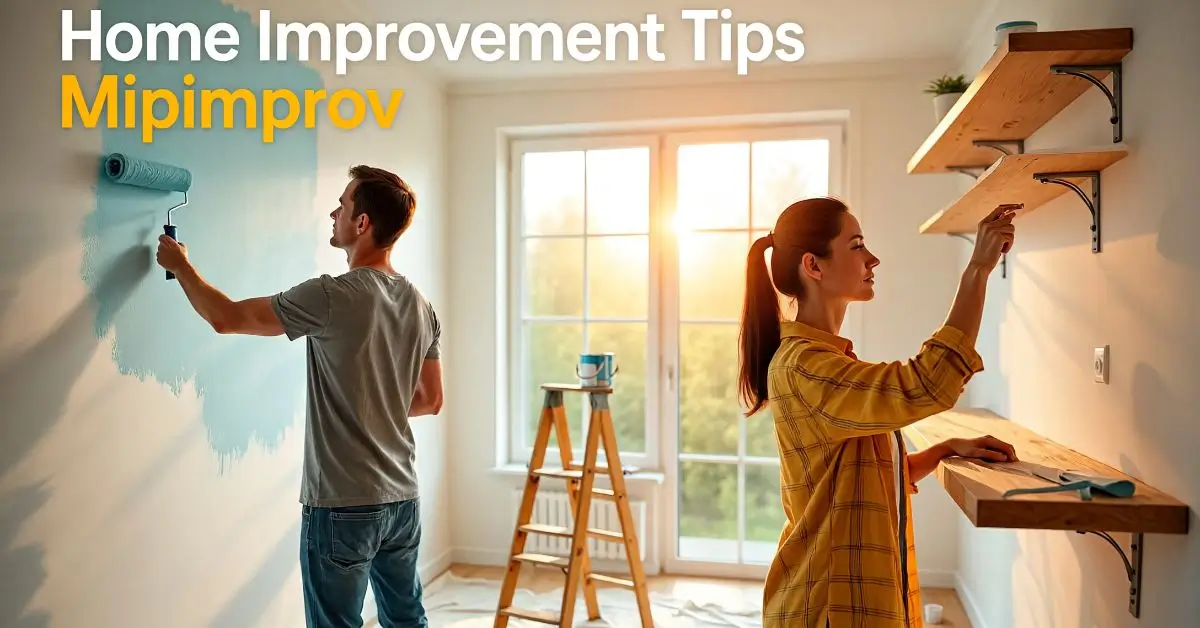
Most homeowners have a growing mental list of things they want to fix, update, or improve. The problem is rarely awareness. It is knowing where to start, how to prioritize limited budgets, and which improvements actually produce meaningful results versus which ones consume money and weekend time without making a noticeable difference.
The home improvement tips from Mipimprov address this challenge directly. Rather than delivering an overwhelming list of everything you could possibly do to a home, the approach focuses on targeted, practical improvements that consistently deliver real value relative to their cost and effort.
This guide covers the most useful home improvement tips organized by category and investment level, with honest implementation guidance and realistic context about what each improvement actually delivers.
Home improvement tips Mipimprov refers to the practical home maintenance, upgrade, and renovation guidance provided through the Mipimprov platform. These tips cover a range of improvements from low-cost maintenance habits that protect your investment to targeted upgrades that increase comfort, energy efficiency, and property value. The Mipimprov approach emphasizes improvements with clear, measurable outcomes rather than aspirational projects that exceed most homeowners’ practical resources.
The most valuable home improvement tips from Mipimprov focus on maintenance that prevents expensive repairs, targeted upgrades with high return per dollar, and energy efficiency improvements that reduce ongoing costs. Start with what is breaking or degrading before improving what is functional. This guide covers the specific tips that deliver the most consistent value across different home types and budgets.
Before diving into specific tips, the most important principle the Mipimprov home improvement approach establishes is that order matters as much as effort.
Homeowners who paint a room in a house with a failing roof have spent money in the wrong sequence. Homeowners who invest in cosmetic kitchen updates while living with drafty windows are paying for appearance when their energy bills are the bigger problem. The most satisfying home improvement outcomes come from addressing problems in order of consequence, not in order of how much you want the result.
The Mipimprov framework organizes improvements into four tiers: preventing damage, improving function, increasing efficiency, and enhancing appearance. Working through these tiers in order, even loosely, produces better outcomes than pursuing improvements randomly based on whatever is most appealing at the moment.
These are not glamorous. They do not produce visible before-and-after results. But they are the home improvement tips that pay off most consistently because they prevent the small problems that become expensive emergencies when ignored.
Replace HVAC filters every one to three months
A clogged air filter forces your heating and cooling system to work harder, reducing efficiency and shortening the compressor lifespan. This single habit affects energy costs, indoor air quality, and system longevity simultaneously. Filters cost $5 to $20. A new HVAC system costs $5,000 to $15,000. The math is clear.
Set a recurring calendar reminder rather than relying on memory. Choose the replacement interval based on your filter type, whether you have pets, and your home’s dust level.
Inspect and clean gutters twice yearly
Gutters exist to move water away from your foundation. When they are clogged, water overflows and accumulates against the foundation walls, increasing the risk of basement moisture, foundation damage, and landscape erosion. Clean in late spring after pollen season and in late fall after leaves drop.
If you are not comfortable on a ladder, professional gutter cleaning costs $100 to $250 and is worth every dollar relative to the foundation repairs it prevents.
Test smoke and carbon monoxide detectors monthly
This takes thirty seconds per detector. Replace batteries annually regardless of the low-battery warning. Replace the detectors themselves on their recommended schedule, ten years for smoke detectors and five to seven years for carbon monoxide detectors. This is the home improvement tip with life-safety implications that most homeowners consistently delay.
Caulk inspection and refresh annually
The caulk sealing tubs, showers, sinks, windows, and exterior penetrations is the primary barrier against water infiltration into walls, floors, and foundations. Caulk degrades over time and the failures are often invisible until significant damage has already occurred. Annual inspection takes fifteen minutes. Recaulking a tub takes an hour and costs under $10 in materials.
Once maintenance is current, improving how your home actually functions delivers the next tier of value.
Upgrade to a smart thermostat
A smart thermostat learns your schedule and adjusts heating and cooling automatically, eliminating the energy waste of conditioning an empty home. Models like the Google Nest or Ecobee cost $150 to $250 and typically pay for themselves within one to two years through reduced energy consumption.
Beyond the financial return, the convenience of a home that adjusts to your schedule rather than requiring manual management is a genuine quality-of-life improvement that most users notice daily.
Install water-saving fixtures
WaterSense certified faucet aerators and showerheads reduce water consumption by 20 to 30 percent without affecting perceived water pressure. These fixtures cost $5 to $30 each and install in minutes without professional help. For a family of four in a region with standard water rates, the annual savings are meaningful and ongoing.
Improve garage door sealing
Most garage doors have weatherstripping that degrades over time, creating significant air infiltration that affects both the garage temperature and any adjacent living spaces. Replacing worn weatherstripping costs $20 to $50 in materials and takes an afternoon. The improvement in garage comfort and in the thermal performance of adjacent rooms is immediately noticeable in extreme weather.
Add a programmable or motion-sensor lighting system
Replacing standard light switches with motion-sensor or smart switches in frequently used areas like hallways, closets, and bathrooms eliminates the energy waste of lights left on unnecessarily. The installation cost is $15 to $40 per switch for a confident DIYer and produces both energy savings and convenience that most homeowners appreciate quickly.
| Priority | Improvement | Cost Range | Difficulty | Return |
|---|---|---|---|---|
| 1 | HVAC filter replacement | $5 to $20 monthly | Very Low | Very High |
| 2 | Gutter cleaning | $0 to $250 | Low to Medium | Very High |
| 3 | Smoke detector maintenance | $15 to $30 annually | Very Low | Critical |
| 4 | Annual caulk inspection | $0 to $10 | Low | High |
| 5 | Smart thermostat installation | $150 to $250 | Low | High |
| 6 | LED bulb replacement | $50 to $150 total | Very Low | High |
| 7 | Weatherstripping replacement | $10 to $60 | Low | High |
| 8 | Fresh paint | $50 to $800 per room | Medium | Very High |
| 9 | Cabinet hardware update | $60 to $150 | Low | High |
| 10 | Attic insulation upgrade | $1,500 to $3,000 | Professional | High (long-term) |
The home improvement tips Mipimprov identifies as having the strongest ongoing financial return are those that reduce energy consumption, because the savings compound indefinitely after the initial investment.
Attic insulation upgrade
Heat rises. In homes without adequate attic insulation, a significant portion of winter heating energy escapes through the ceiling into the attic rather than keeping the living spaces warm. Adding insulation to bring attic R-value up to current recommended levels for your climate zone typically costs $1,500 to $3,000 for a professional installation and produces energy savings that recover the investment within three to five years.
Air sealing
Before adding insulation, sealing the air leaks that allow conditioned air to escape through gaps around electrical boxes, pipe penetrations, attic hatches, and other penetrations is the more cost-effective first step. A tube of spray foam costs $8 and sealing two hours worth of attic penetrations can reduce air infiltration dramatically.
LED lighting replacement throughout
If your home still has any incandescent or CFL bulbs, replacing them with LED alternatives is one of the lowest-effort, highest-return energy improvements available. LEDs use 75 to 80 percent less energy and last ten times longer. Replacing all bulbs in a typical home costs $50 to $150 and reduces lighting energy costs significantly from the first month.
Exterior door weatherstripping replacement
Hold a piece of paper against the closed edge of an exterior door and pull it out. If it slides out easily, your weatherstripping is no longer sealing the door effectively. Replacement weatherstripping for a standard door costs $10 to $30 and installs without tools. The air infiltration reduction around exterior doors is one of the most practical energy improvements available in older homes.
After maintenance and functional improvements are addressed, visual and cosmetic upgrades that improve how the home presents and feels become the focus.
Fresh paint in primary living areas
Fresh paint produces one of the largest visible improvements per dollar available in home improvement. Faded, dirty, or dated wall colors communicate neglect and age in ways that affect how every other element in the room reads visually. Painting the main living area and entry in a current, cohesive color scheme transforms how a home feels before you change anything else.
Cost is $50 to $150 per room in materials for a DIY application. Professional painting runs $400 to $800 per room. The visual return justifies either approach depending on your time availability and painting confidence.
Update cabinet hardware in kitchen and bathrooms
Cabinet pulls and knobs are touched dozens of times daily and are among the most visible elements in the rooms where they appear. Outdated or low-quality hardware communicates neglect that impacts the perceived quality of the entire room. Replacing all kitchen and bathroom hardware with consistent, current designs in a single finish costs $60 to $150 and takes an afternoon.
Exterior curb appeal basics
First impressions are formed from the street, and homes with strong curb appeal are consistently perceived as better-maintained and more valuable than comparable homes with neglected exteriors. Power washing driveways and siding, repainting or replacing the mailbox and house numbers, and maintaining the lawn edge and entry planting create the kind of curb appeal that matters for both daily enjoyment and eventual resale.
The home improvement tips from Mipimprov work because they are grounded in what actually matters for most homeowners rather than what looks impressive in renovation media. Protecting your investment through consistent maintenance, improving function before appearance, and investing in energy efficiency before cosmetics produces better long-term outcomes than any renovation project approached without this foundational thinking.
Start where the consequences of inaction are greatest. Address the maintenance items that are actively degrading. Add the efficiency improvements whose savings compound over time. Then invest in the cosmetic improvements that make daily life more enjoyable. That sequence, applied consistently, produces genuinely better homes.
If this guide helped you think more clearly about your home improvement priorities, explore our related articles on how to plan a home improvement budget that actually works and the best energy efficiency upgrades for older homes. Both give you the practical next steps for applying these principles to your specific situation.
They are practical maintenance and upgrade recommendations focused on improvements that protect your investment, reduce ongoing costs, and improve comfort, rather than generic renovation advice disconnected from real homeowner budgets.
HVAC filter replacement, annual caulk inspection, LED bulb replacement, and weatherstripping on exterior doors deliver the highest combined return for under $300, all without professional help.
One to two percent of your home’s value per year. For a $400,000 home, that is $4,000 to $8,000 covering both maintenance and targeted upgrades. Older homes or aging systems often need more.
Kitchen and bathroom updates, fresh paint, updated flooring, and curb appeal consistently deliver the strongest return. Minor kitchen updates often return more than their cost at resale.
Yes, for most maintenance and efficiency tasks including filters, caulking, weatherstripping, LEDs, and hardware. Leave attic insulation, electrical, gas appliances, structural work, and roofing to licensed professionals.
Address safety first, then water and moisture issues, then structural concerns, then energy efficiency, then cosmetics. Most homeowners skip the first three and overspend on appearance while ignoring what matters most.